
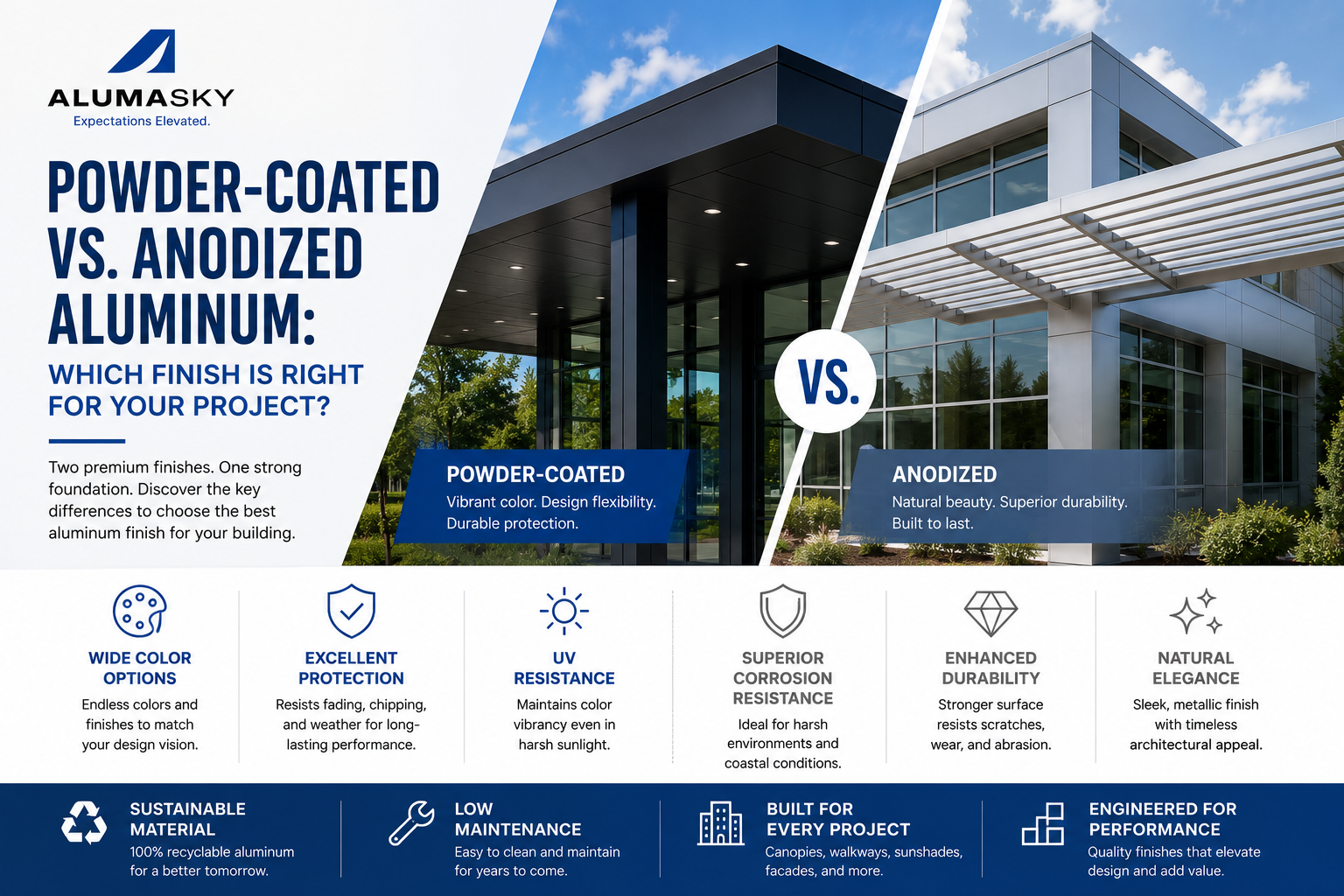
Selecting the right finish is one of the most important decisions when specifying architectural aluminum systems. While aluminum is naturally resistant to corrosion, protective finishes further enhance its durability, appearance, and long-term performance.
The two most common finishing options for commercial aluminum products are powder coating and anodizing. Each offers unique advantages depending on the project’s design goals, environmental conditions, and maintenance expectations.
Understanding the differences between these finishes helps architects, contractors, and building owners choose the best solution for canopies, walkway covers, sunshades, facades, and other architectural aluminum systems.
Powder-Coated Aluminum: Color, Protection & Design Flexibility
Powder coating is a dry finishing process that applies a protective colored coating to the aluminum surface before it is cured under heat.
The result is a smooth, durable finish available in virtually any color.
Wide Color Selection: Match corporate branding, architectural themes, or custom project specifications.
Excellent Durability: Provides strong resistance to fading, chipping, and weather exposure.
Consistent Appearance: Creates a uniform finish across large architectural systems.
Design Freedom: Available in matte, satin, gloss, and textured finishes.
Tip: Powder-coated aluminum is an excellent choice for projects where aesthetics and color customization are priorities.
Anodized Aluminum: Natural Protection & Long-Term Performance
Unlike powder coating, anodizing is an electrochemical process that strengthens aluminum’s natural oxide layer.
Rather than adding a coating, anodizing becomes part of the aluminum itself.
Superior Corrosion Resistance: Ideal for coastal environments and areas with high humidity.
Scratch Resistance: Harder surface helps resist wear over time.
Metallic Appearance: Maintains aluminum’s natural look while enhancing durability.
Long Service Life: Excellent performance with minimal maintenance.
Tip: Anodized aluminum is often selected for projects requiring a clean, contemporary metallic appearance.
Comparing Performance
Both finishes are designed to protect aluminum, but each performs differently depending on project requirements.
Powder-Coated Aluminum
- Exceptional color flexibility
- Excellent UV resistance
- Smooth decorative finish
- Easy to coordinate with building designs
Anodized Aluminum
- Outstanding corrosion resistance
- Highly durable surface
- Natural metallic appearance
- Excellent long-term weather performance
Tip: The best finish depends on both environmental conditions and architectural design goals.
Maintenance Requirements
One reason aluminum remains popular in commercial construction is its minimal maintenance requirements.
Both finishes require only routine care.
Routine Cleaning: Wash surfaces periodically using mild soap and water.
Annual Inspections: Check for damage, fastener condition, and sealant performance.
Avoid Abrasive Cleaners: Protect the finish by using non-abrasive cleaning materials.
Long-Term Performance: Both powder-coated and anodized finishes maintain their appearance with proper maintenance.
Tip: Establish a regular maintenance schedule to maximize the life of architectural aluminum systems.
Where Each Finish Works Best
Different project types often benefit from different finishing options.
Powder-Coated Aluminum
Ideal for:
- Office buildings
- Educational facilities
- Healthcare centers
- Retail developments
- Custom architectural projects
Anodized Aluminum
Ideal for:
- Coastal buildings
- Transportation facilities
- Public infrastructure
- High-traffic environments
- Modern commercial facades
Tip: Many commercial projects combine both finishes depending on specific applications throughout the building.
Sustainability & Long-Term Value
Both finishing methods support sustainable building practices.
Long Service Life: Durable finishes reduce replacement frequency.
Low Maintenance: Less maintenance means lower lifecycle costs.
Recyclable Material: Aluminum remains 100% recyclable after decades of use.
Environmentally Responsible: Long-lasting systems contribute to sustainable commercial construction.
Tip: Choosing durable architectural materials helps maximize return on investment over the building’s lifecycle.
Why Architects Trust Aluminum Finishes
Architects continue specifying aluminum because it delivers performance, flexibility, and timeless aesthetics.
Whether selecting a custom powder-coated color to complement a building’s design or an anodized finish for maximum durability, both options provide dependable protection for commercial architectural systems.
Choosing the appropriate finish ensures that aluminum canopies, walkway covers, sunshades, and façade elements continue performing beautifully for decades.
Conclusion: Selecting the Right Finish for Lasting Performance
Both powder-coated and anodized aluminum offer exceptional benefits for commercial construction projects. Powder coating provides unmatched color versatility and design flexibility, while anodizing delivers outstanding durability and corrosion resistance.
By understanding the strengths of each finish, architects and contractors can specify aluminum systems that meet both functional requirements and aesthetic goals.
Whether your project prioritizes appearance, performance, or long-term maintenance, selecting the right aluminum finish is an investment that enhances the value and longevity of your building.
