
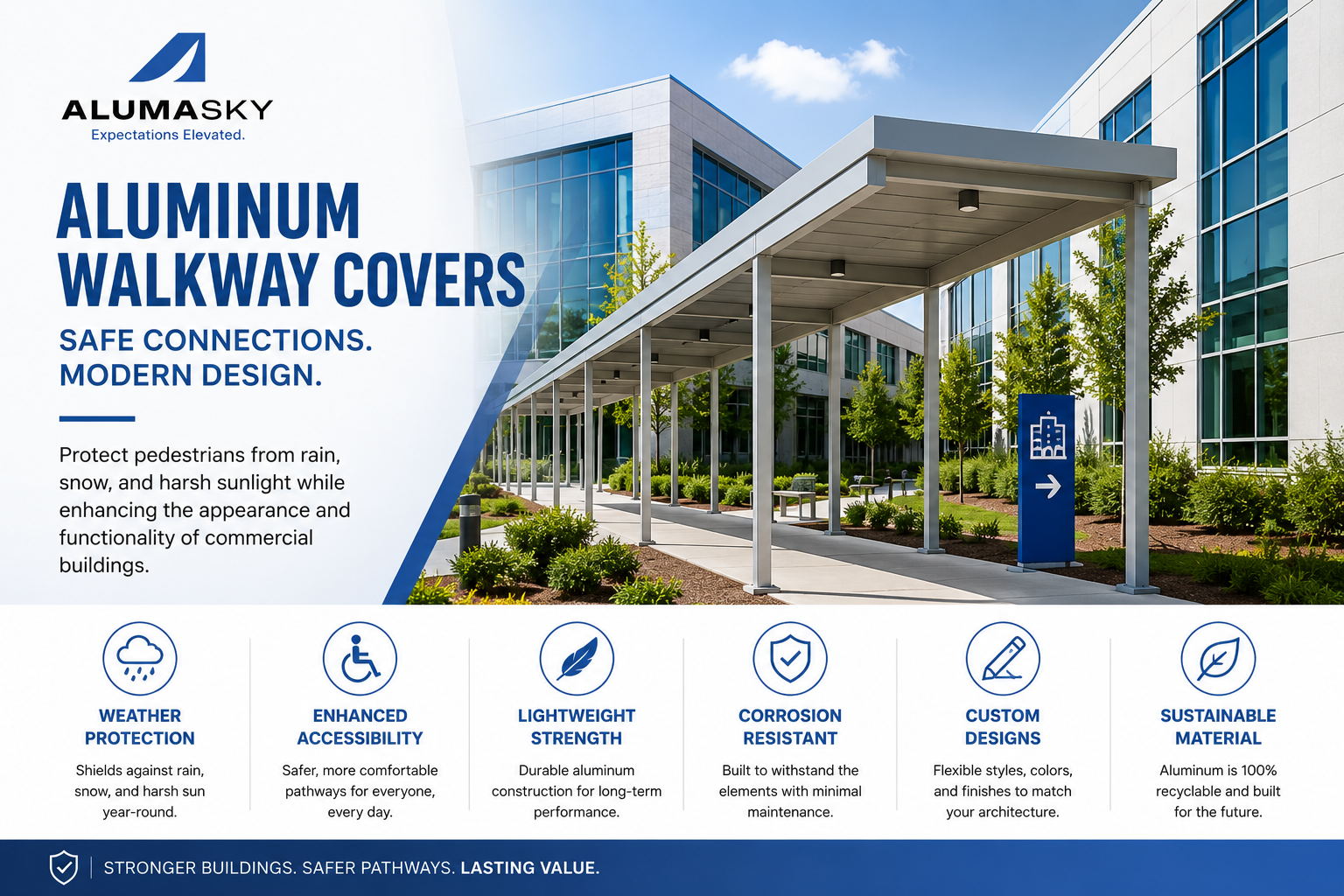
Aluminum walkway covers have become an essential feature in modern commercial architecture, providing year-round protection while enhancing the appearance and functionality of buildings. Whether connecting multiple facilities on a corporate campus, protecting students between school buildings, or creating covered pedestrian pathways at hospitals and transportation centers, aluminum walkway covers improve safety, accessibility, and user comfort.
Thanks to their lightweight construction, corrosion resistance, and customizable designs, aluminum walkway systems offer architects and building owners a durable, low-maintenance solution that performs for decades.
By incorporating aluminum walkway covers into commercial projects, organizations create safer environments while adding lasting architectural value.
Weather Protection: Keeping Pedestrians Safe Year-Round
One of the greatest advantages of aluminum walkway covers is their ability to protect people from changing weather conditions.
Rain Protection: Covered walkways keep pedestrians dry while reducing slippery walking surfaces.
Snow Protection: Help minimize snow and ice accumulation along frequently used paths.
Sun Protection: Provide comfortable shade during warmer months, reducing heat exposure.
Year-Round Accessibility: Ensure safer movement between buildings regardless of weather conditions.
Tip: Covered pedestrian routes are especially valuable for schools, healthcare campuses, and corporate facilities with multiple buildings.
Improving Safety & Accessibility
Walkway covers do more than provide shelter—they help create safer, more accessible environments.
Slip Prevention: Dry walking surfaces reduce the risk of slips and falls.
ADA-Friendly Access: Covered paths provide greater comfort for individuals using mobility devices.
Better Visibility: Integrated lighting systems can improve safety during evening hours.
Pedestrian Comfort: Employees, students, patients, and visitors appreciate protected walkways in every season.
Tip: Adding lighting and proper drainage enhances both safety and functionality.
Lightweight Strength: Built for Long-Term Performance
Aluminum offers exceptional structural performance without the weight of traditional materials.
Lightweight Construction: Easier transportation and installation.
Corrosion Resistance: Naturally resists rust, making it ideal for outdoor environments.
Structural Durability: Designed to withstand wind, rain, snow, and daily use.
Minimal Maintenance: Requires only periodic cleaning and inspections.
Tip: Aluminum structures often reduce installation time while maintaining long-term reliability.
Design Flexibility for Every Project
Every commercial project has unique architectural requirements.
Aluminum walkway covers can be customized to match virtually any building style.
Roof Styles: Flat, curved, gable, or cantilevered designs.
Custom Colors: Powder-coated finishes available in a wide range of colors.
Integrated Features: Lighting, gutters, fascia panels, and decorative accents.
Architectural Coordination: Easily complements existing building materials and facades.
Tip: Matching walkway covers with entrance canopies creates a cohesive architectural appearance.
Low Maintenance Means Lower Ownership Costs
Aluminum’s natural durability significantly reduces long-term maintenance requirements.
Routine Cleaning: Wash surfaces using mild soap and water.
Annual Inspections: Check fasteners, structural connections, and sealants.
Long-Lasting Finishes: Powder-coated aluminum maintains its appearance for years.
Corrosion Resistance: No rust means fewer repairs and lower maintenance costs.
Tip: Preventative maintenance helps maximize the lifespan of aluminum systems.
Common Applications for Aluminum Walkway Covers
Aluminum walkway covers are widely used across many industries.
Educational Facilities: Connect classrooms, libraries, and athletic buildings.
Healthcare Campuses: Protect patients, visitors, and staff between facilities.
Corporate Offices: Improve employee access between buildings.
Transportation Centers: Shelter passengers at transit stations and terminals.
Government Buildings: Create safe pedestrian pathways while enhancing property appearance.
Tip: Walkway covers can also support wayfinding by defining pedestrian circulation throughout a site.
Why Architects Continue Choosing Aluminum Walkway Covers
Architects and developers continue choosing aluminum because it delivers an ideal balance of strength, aesthetics, and long-term value.
Its corrosion resistance, lightweight construction, design flexibility, and low maintenance make it one of the most practical materials for covered pedestrian systems.
As commercial developments continue emphasizing accessibility, safety, and sustainability, aluminum walkway covers remain a smart architectural investment.
Conclusion: Protecting People While Enhancing Architecture
Aluminum walkway covers provide more than shelter—they improve safety, increase accessibility, enhance building aesthetics, and create comfortable outdoor environments for building occupants.
With customizable designs, exceptional durability, and minimal maintenance requirements, aluminum walkway systems offer long-term value for schools, hospitals, office campuses, retail centers, and public facilities.
Whether incorporated into a new development or added during a renovation, aluminum walkway covers deliver lasting performance while elevating the overall architectural experience.
